Monk Took Book Enemy Tier List
Score hauntings by lost checkouts, not by a damage meter.
This list ranks what wrecks a Monk Took Book night, not what looks scary in a trailer. You are paid to remember covers and fill scribe orders before dawn. A foe that steals a unique tome, starts a fire in a packed bay, or camps the checkout desk outranks a louder Draugr in the snow. Combat is optional. Every row below assumes you left that threat on in Game Options. If you disabled it, its tier is “absent,” which is a valid Holy Island.
Score the same three jobs as the rest of the Tier List Hub: solo memory nights, combat nights with hauntings on, and four-player speed. Four monks sit at about fifty-five percent of a solo timer, so a time-sink duel is a failed checkout even if you win the fight. Pair this page with combat for how to swing, how to protect the collection for buckets and footprints, and weapons and tools for the kit.
S means this threat ends nights even when you play well. A means it regularly costs a fetch or a unique cover. B means it is annoying and manageable. C means it is flavour unless you stand in the wrong doorway. Lord Fluffy is a cat. The cat is not on this list.
S tier: Book Thief, fire as a system
Book Thief. A small creeping steal, not a duelist. He lifts volumes from shelves you already filed and flees. He leaves green footprints that fade. If an order cover is simply gone, assume theft before you assume your memory failed. In solo he is S because you cannot fetch and chase at once. In co-op he is still S unless you named a thief-hunter who carries no rare stack. Catching him is a trophy (To catch a thief) and a conservation job: reshelve in the original family or tomorrow’s desk is a lie.
Fire (embers, handheld torches, fire arrows). Simulated flame is more dangerous than most melee. Embers bounce. Books ignite. Fire arrows carry about a fifty percent ember chance. A torch on a cataloguing table is an S-tier enemy you built yourself. Rain helps outdoors; it does not babysit a vault. The bucket from the cloister well is the answer. The Torch Perk shrine pushes ember chance toward zero. Disable fires if you want this row gone. Rank fire here, not on the weapons page, because the combustion system is the boss.
A tier: Green Abbot, Berserker, rabbit archers
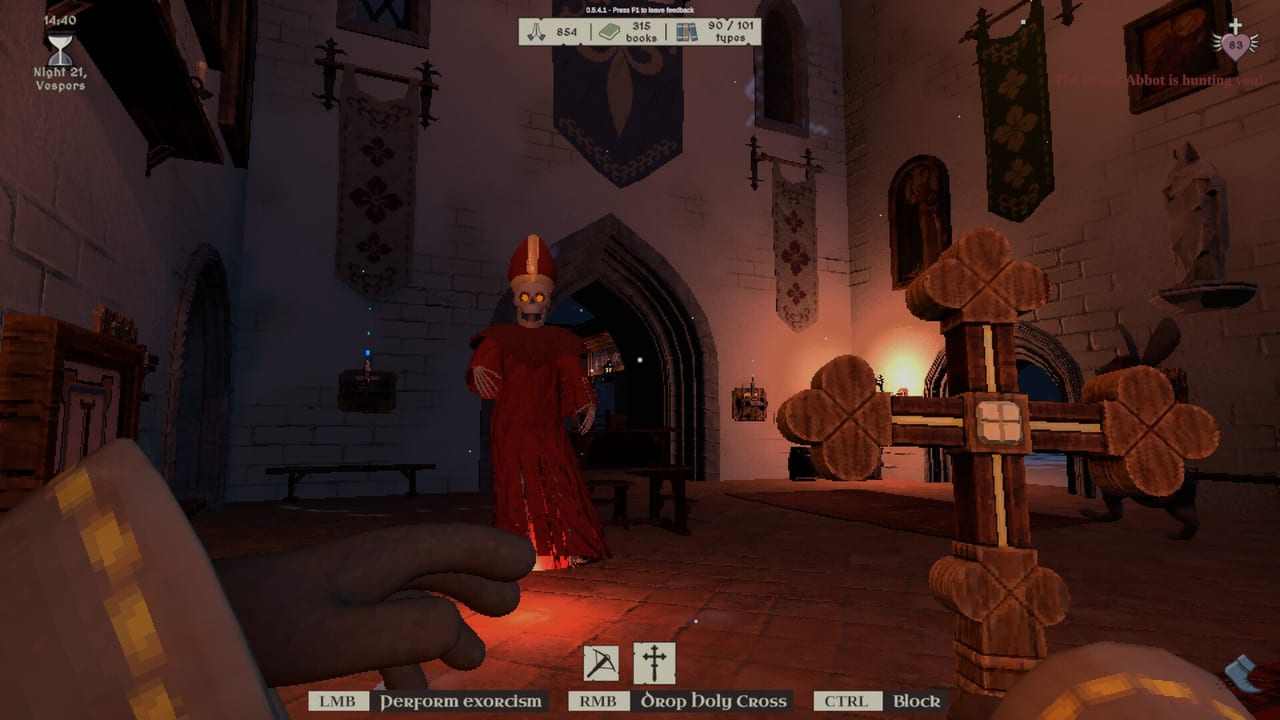
Green Abbot. A haunting that does not respect a dagger the way a Grunt does. Bring the holy cross and exorcise. He is A, not S, because he is a known recipe: buy the cross, keep it in a grab-spot, finish the rite, return to the desk. He becomes S if you dumped the cross in a shop chest. If you disabled spirits, you will not meet him. After the exorcism, check for fire; hauntings walk through your lighting plan.
Viking Draugr Berserker. The one you do not 1v1 in a narrow aisle. SquarePlay added Perfect Parry because ordinary blocks were not enough depth. Land the window, take free hits, leave. A Berserker who camps checkout is A. A Berserker in a locked wing you are not fetching from is C until you open that door. Four-player nights should peel, not pile. Kill-a-berserker is a real achievement and a bad reason to burn the timer.
Rabbit archers. Man-sized rabbits with bows on hill, mezzanine, and snowy sightlines. They punish sprinting with a stack in both hands. Break line of sight behind shelves. A crossbow is the clean poke; fire bolts are how this A-tier threat promotes fire into S. Invert the usual MMO logic: the archer is dangerous because of the route, not the HP bar.
B tier: Raider, jumping spiders, rats
Viking Draugr Raider. Harder than a Grunt, more block, still a kite-or-parry problem rather than a library eraser. Fight when he blocks the only path to a listed cover. Otherwise take the other side of the path. Kill a raider is a separate trophy from Grunt and Berserker. Do not collapse those names.
Jumping spiders. They close distance faster than you want at the top of a ladder. Startle plus fall plus dropped stack is the real cost. Arachnophobia mode replaces models with moving text; the threat remains. If spiders are the reason you would uninstall, turn them down. Kill a jumping spider is distinct from Kill a spider.
Rats. Vermin chew books in the hall and along the hill. A nibbled tome is still a tome until the quill repairs it, but damaged stock is easy to misread in a hurry. Kick them off shelves, keep flame away from paper, or let Lord Fluffy hunt. Rats are B because they are slow collection damage, not a wiped night, unless you ignore them for several days. Kill a rat pops while you are already doing conservation.
C tier: Grunt, ordinary spiders, spectacle in empty rooms
Viking Draugr Grunt. Basic melee haunt. Practice Perfect Parry here, in an empty aisle, not in front of three remaining orders. Kite around furniture. He is C as a night-wrecker and A as a tutorial. Kill a grunt will happen if you leave beasts on and stop panicking.
Ordinary spiders. Occupying an aisle is not the same as ending a run. Jumping variants are the upgrade. If arachnophobia is on, treat the text threat like any other blocker: walk around, or delete the slider.
Empty-room spectacle — a haunt in a chamber you have not unlocked, a skeleton on a path you are not using — is C. Do not tour the monastery map during Vespers to tidy ghosts. The Abbot pays for orders.
Peaceful, combat, and four-monk lenses
Solo memory nights. Thief and fire stay S. Everything else is a time tax. If you came to file covers, disable what you hate and keep the bucket anyway. The how to play loop does not require a Berserker.
Combat nights. Berserker and Green Abbot rise. Archers rise if your filing uses outdoor or mezzanine routes. Still douse before you duel. A dead Raider on a burned unique cover is a loss.
Four-player speed. Name roles or the S-tier threats win. Thief-hunter travels light. Pail monk does not also carry the large ladder. Cross owner is not the same person as the shelving architect. Details live in co-op and solo versus co-op. Stacking four daggers on one Grunt while prints fade is how co-op nights miss the desk.
Difficulty sliders are part of the ranking
Reduce, increase, or disable some or all enemies, pests, and fires independently. Arachnophobia is separate from disable. Book rate is a delivery slider, not a haunt slider. None of this is cheating. SquarePlay shipped granular difficulty because the abbey is a memory toy first. If you raise foes for achievements, do it on a save you can stand to scuff, and keep the conservation kit from the protect guide in reach.
Patch tweaks to enemy HP, parry, and thief behaviour land in patch notes. Demo (app 4255310) hauntings are practice and cannot join paid lobbies. Rank what you see in the live client, not a memory of Next Fest.
Walk the hall before you ring. If a unique cover is missing, look for green prints. If parchment glows, fetch water. If a Berserker is in a wing you do not need, close the door. That is the tier list, applied.
Frequently Asked Questions
Quick answers for novices tending the Holy Island library.
How is this enemy list ranked?
By lost checkouts and unique covers, not damage meters. Thief and fire sit in S because they erase work. See how to protect the collection.
Can I ignore this list on a peaceful save?
Yes. Disable or reduce foes, pests, and fires in settings. Absent threats have no tier. The collection loop still applies.
Why is the Book Thief above a Berserker?
A Berserker is a fight you can kite. A thief deletes a filed cover and fades the trail. Tomorrow's desk then tests a lie.
Is fire an enemy?
The combustion system is scored here because embers and fire arrows wreck shelves. The bucket and Torch Perk are the counter, not a parry.
Does arachnophobia change ranks?
It changes how spiders present, not the threat. Jumping spiders stay B. You can still disable them if models or text are unwelcome.
Do four players change the ranks?
Timers shrink to about 55 percent of solo, so time-sink duels hurt more. Name a thief-hunter and a pail monk. See co-op.