Monk Took Book Solo vs Co-op
Solo teaches the abbey. Four monks shorten the night and fill every aisle.
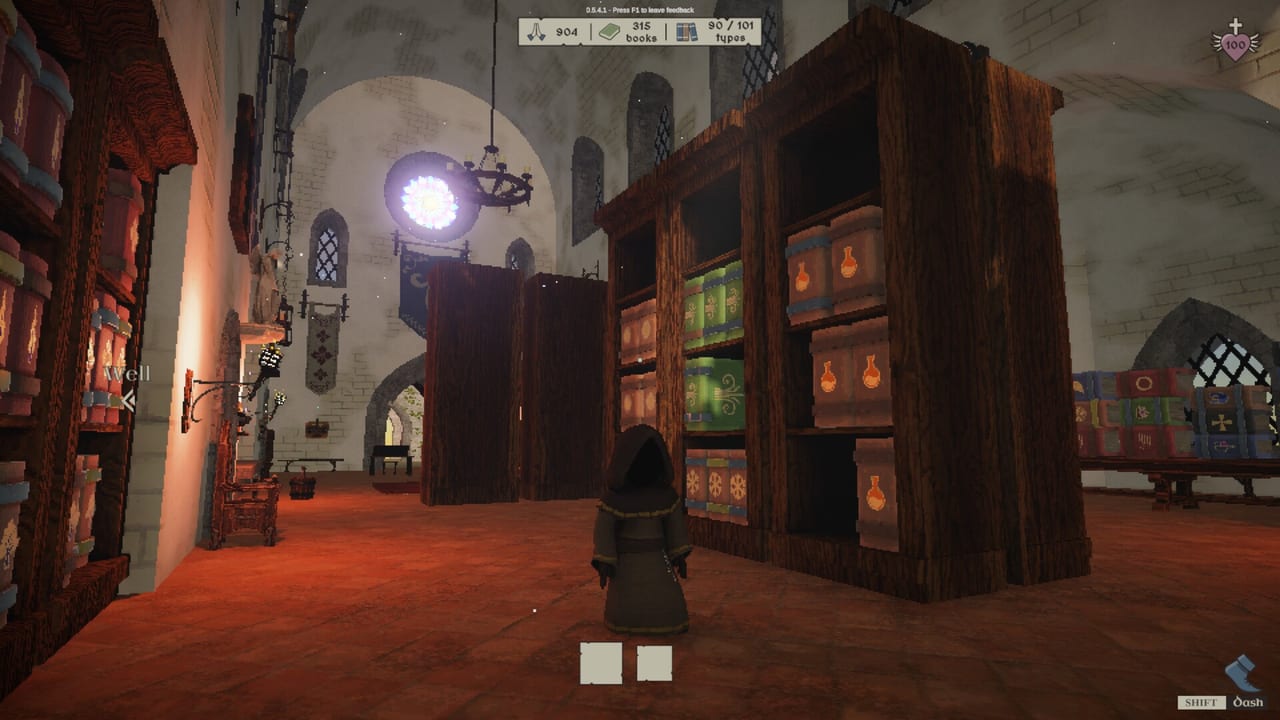
Monk Took Book supports a full solo abbey and 1–4 player online co-op on Steam. Solo is not a cut-down mode. Co-op is the intended chaos: extra hands, extra torches, extra opinions about where the bees go, and a night clock that shrinks as the lobby fills. Four players sit at about fifty-five percent of the solo timer. That is the number that should decide whether you host tonight.
This page is the lobby and roles half. Practical callouts and ladder etiquette live in the co-op guide. Voice, camera, and difficulty toggles live in settings. Spend rules do not change because you brought friends; they get stricter. Read the Blessings guide before four monks empty the purse on four holy crosses.
When to play alone
Play solo to learn the monastery map, to invent a filing system you actually remember, and to hear the day-night loop without someone shouting a wrong bay. Getting started and the first walkthrough night should be solo if you can stand it. You will know where the well, crypt, dock, and belfry are. You will know whether you want threats on. You will earn a purse you understand.
Solo is also the honest memory exam. Nobody else is holding the animal shelf in their head. If that is the game you wanted — covers, shelves, a quiet dash to the desk — stay solo, leave proximity chat off, and spend on carry and recovery. The perk tier list is written for that monk first.
Stay solo when your hardware or schedule cannot host. Check system requirements before you promise a four-player night. Public lobbies are available; they are not a good first teacher.
When to invite brethren
Invite people when the hall is large enough that one monk cannot both file and fetch, when you want the chaos SquarePlay designed, or when you already have a shelf language and want to stress-test it. Co-op shines at dock unloads, at split-wing filing, and at defence: one monk can hold a dagger or holy cross while another still makes the desk. It fails when four people sort the same bay and the timer is already cut to 55 percent.
Host private if you care about the collection. Use Steam invites or a pasteable lobby code. Public is for strangers who may throw books for sport. The demo cannot join full-game lobbies; everyone must be on the purchased app or everyone must be on the demo. Mixed nights simply do not appear.
How to split rooms
Name four jobs even if you only have two monks. Drop the extras.
Shelving architect. Owns the filing language and the ladders. Works by day, parks the large ladder under the active bay, and does not chase scribes unless the night is already won. Reads how to organize out loud once so the others stop inventing a second system.
Night runner. Owns carry space, dash recovery, and the desk route. Does not take the large ladder. Prays for S-tier fetch perks. Stands at the checkout, calls covers, and runs.
Defender. Owns dagger, Perfect Parry, holy cross versus the Green Abbot, bucket if fire is on. Walks the stacks the runner is not in. Does not reshelve “helpfully” in the wrong theme. Combat and weapons and tools are this role’s reading list.
Thief tracker. Travels light, watches for the book thief and for covers that leave their bay. Calls locations on proximity voice. Can also be the dock hauler by day.
Split the building the same way you split jobs: one wing per pair, or nave versus cloister versus upper stacks. Do not have four monks in one aisle. Do not all visit the crypt at dusk. Daylight is for spending; night is for the boon.
Night timer, voice, robes
More players, less clock. Two is already tighter than solo. Four is 55 percent of solo. That is why thrown-book shortcuts and pre-staged ladders matter, and why a committee at a shrine is a wipe. If the lobby cannot beat the shortened night, turn book rate down or threats off in settings rather than yelling.
Proximity voice is in-world. If you walk away, they fade. Stand together to plan a spend. During a night, the runner calls from the desk; the architect answers from the bay; long-distance lectures fail. Text chat exists for the mute and for pasteable notes (“bees = upper west”). Rebind push-to-talk in controls before the first fire.
Robe colours are how you identify a monk in first or third person when four hoods fill a stair. Agree colours at the door: red runner, white architect, and so on. Call colour, not Steam name, during a fetch. If two people pick the same robe, change before the bell. Lord Fluffy is not a player colour. The cat does not get a wing.
Reconnect, drop-ins, demo walls
Online co-op supports coming back after a drop. If someone disconnects mid-night, the others should finish the orders they can and avoid a panic reshelve. The missing monk’s ladder and stack stay in the world; do not hide them in a new room. After reconnect, say your robe colour and job before you grab a weapon. Hosts should keep the lobby private so a stranger does not appear in the crypt during the panic.
Manual and autosave exist. Host before the dock unloads, not during a spirit fight. If a patch moved lobby behaviour, read patch notes and launch. If one friend only owns the demo, you are running a demo night or you are waiting. There is no cross-app party.
Spend and difficulty as a group
Shared Blessings buy one plan from the Blessings hub: shelves, then the missing tool, then carry and recovery, then height, then rooms. Four daggers is not a plan. One large ladder plus a quill plus a recovery shrine is a plan. Torch safety is a group buy if anyone insists on fire arrows (fifty percent ember chance).
Difficulty is also a group vote. Arachnophobia mode, enemy density, fire, and book rate are why co-op stays fun for mixed skill. Turn threats down if the 55 percent timer plus ghosts is a brick wall. Turn them up only after the filing language is shared. How to play still applies; four people do not skip the bell.
The review is honest about chaos. The guides hub and tier list hub are the reading order if your lobby wants a short briefing. Official links and the links hub are where to send a friend who still needs the Steam page. Tools holds planner, settings, and requirements.
Host solo until you can file without thinking, then invite people into a map you can already run at 55 percent. Split wings, name robes, keep voice close, reconnect to the same job, and never mix demo with the full abbey. The Abbot pays the early-finish boon to a team that already knew who owned the ladder.
Frequently Asked Questions
Quick answers for novices tending the Holy Island library.
Is solo a full game?
Yes. Solo is fully supported. Co-op is extra chaos and a shorter night, not a required mode. Learn the abbey with getting started before you host.
How short is a four-player night?
About 55 percent of the solo timer. Two and three players sit in between. Split rooms and jobs so you are not all in one aisle. Practical callouts are in the co-op guide.
Does proximity voice work across the abbey?
No. It fades with distance. Plan spends while standing together, then call short cover names during the night. Toggle voice in settings.
Can demo players join a full-game lobby?
No. The demo stays live but cannot join purchased-game lobbies because the app IDs differ. See demo notes.
What if someone disconnects?
Finish the orders you can. Leave their ladder and stack where they are. After reconnect they should announce robe colour and job. Hosts should keep the lobby private.
How should we spend shared Blessings?
One plan: shelves, missing tool, carry and recovery, then height or a room. Ranks are on the perk tier list. Do not buy four of every weapon.