Monk Took Book Co-op Guide
One to four monks, shared shelves, and a shorter night when the abbey is full.
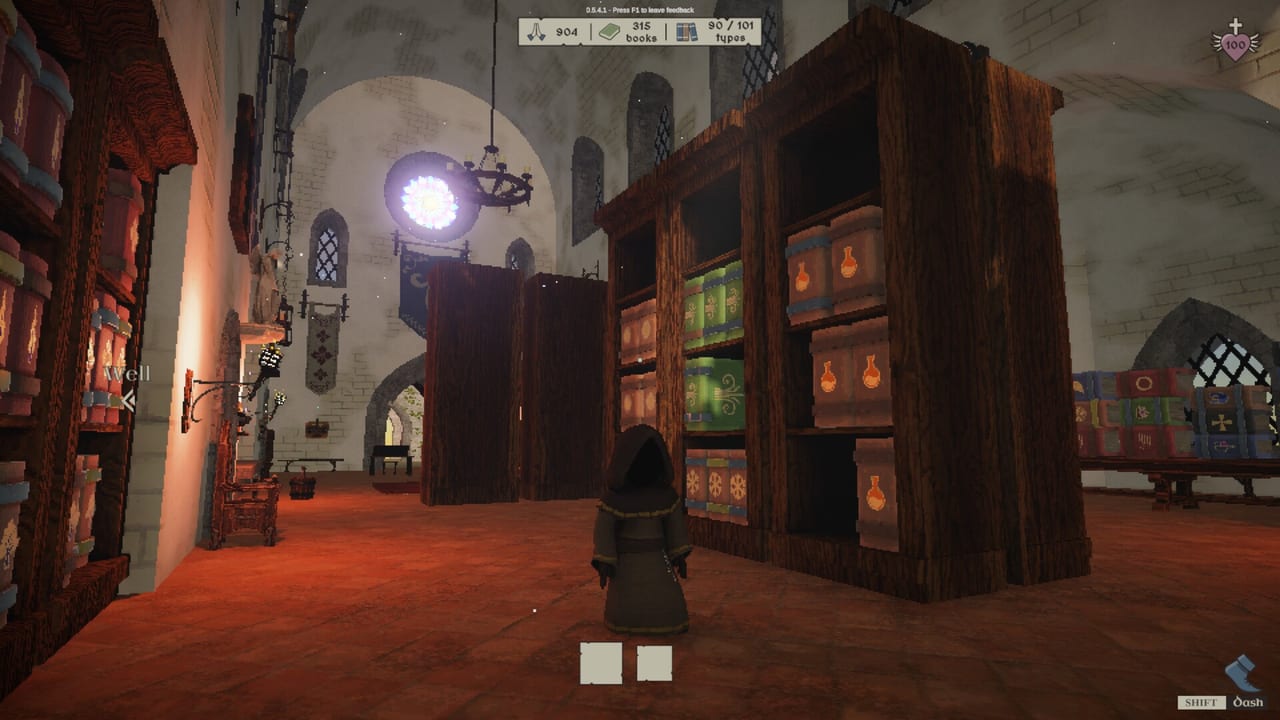
Monk Took Book is built for one librarian or a house of four. SquarePlay Games shipped online co-op on Steam — public and private lobbies, Steam invites, copy-paste join codes, proximity voice, and in-game text chat. There is no couch split-screen. There is no Roblox server browser. You host on PC, your brethren join on PC, and the abbey either sings or catches fire together.
If you are still choosing a group size, read solo and co-op first. This page is the practical host manual: how people get in, why the demo cannot mix with the full game, how to reconnect, and how to split work so four monks do not all grab the same lion book.
Host and join
From the main menu, one player hosts. Everyone else joins. Use a private lobby if you only want named friends; use a public lobby if you are fine with unknown novices wandering your taxonomy. Steam invites are the low-friction path for people already on your friends list. If invites stall, copy the lobby join code and paste it in chat, Discord, or a Steam message. Codes exist because Steam overlay invites are not always enough.
Host on the machine that meets system requirements. Integrated GPUs are not supported; a host who stutters will stutter for the house. Before you click go, agree on Game Options: enemy density, book rate, arachnophobia, first or third person. Changing the haunt level after people have bought daggers is how arguments start.
Demo monks cannot mix with the full game
The demo is Steam app 4255310. The full game is a different app. The demo stays live after the 3 September 2026 launch, which is generous and also a trap. Demo saves and demo lobbies do not join purchased-game lobbies. If one friend bought the game and another is still on the demo, you will not share a night. Buy up, or all stay on the demo’s five-to-six-night slice.
Do not promise a mixed lobby in a public post. The app IDs differ on purpose. Hosts who type “demo welcome” in a full-game lobby will sit alone.
Voice, text, and the shape of the abbey
Proximity voice is positional. If you are at the dock and your shelver is in the crypt, you will not have a crystal-clear planning meeting. That is the point. Call the important things while you are in the same room: “lions left of checkout,” “pail is at the well,” “thief footprints on the mezzanine.” Use text chat for the join code, for players without mics, and for the taxonomy rule you want written down.
Do not rely on voice to store memory. The memory planner and a spoken shelf rule together beat four people improvising families. If two monks invent two systems, night orders become a scavenger hunt.
Reconnect without wrecking the hall
Disconnects happen on the hill, in the belfry, and mid-parry. The host should wait a reasonable window before assuming a monk is gone for the night. When someone rejoins, they need a ten-second brief: where new types live, which weapon racks are claimed, whether a fire is active, whether a Book Thief trail is hot. Do not dump the reconnecting player into a burning aisle with no pail.
Manual and autosave both exist. Hosts should still avoid alt-tabbing through a four-player night if they can help it. If the host drops, the lobby dies; treat the host machine like the abbey roof.
Do not snatch items from hands
The physics toy is generous: huge stacks, long throws, shared ladders. It is also how friendships end. If a brother is carrying a stack, do not rip books out of their hands because you spotted a matching cover. If someone has the pail, they are the fire monk until they set it down. If someone planted a ladder on a bay, that is their route unless they offer it.
Snatching looks efficient and creates duplicates in motion — two people pathing the same tome, nobody pathing the checkout. Ask, throw, or wait. Thrown books are a legal shortcut; stolen hands are not. The same rule applies to weapons. A dagger yanked mid-parry is a downed monk and a Draugr in the aisle.
Role split that actually works
Four jobs cover a full house. You can combine them in duos. You should not all play runner.
Runner. Lives on the dock and the hill. Hauls morning deliveries, returns empty-handed, does not stop to redesign shelves. At night, runner is the long-distance fetch for covers stored in unlocked chambers or on the mezzanine.
Shelver. Owns the taxonomy. Stands in the main hall, places covers by the spoken rule, keeps aisles clear, and is the only person allowed to “improve” a family mid-day. Night duty is local fetches and quill repairs. Read the organization guide before you volunteer.
Defender. Bucket, torch discipline, dagger or crossbow. Watches fire, rats, and Draugr so the other three can think. Does not wander into a new chamber “just to look” during an order. Loadouts live on the weapons tier list and in combat.
Thief-hunter. When green footprints appear, this monk drops stacks and follows. Recovers books to the shelver, not to a random table. If hauntings are disabled, this role collapses into runner.
Lord Fluffy is not a fifth player. Pet the cat, let the cat hunt, do not assign the cat a checkout.
Four players, shorter nights
More monks reduce default night time. A four-player hourglass is about 55 percent of solo. That is not a bug. The abbey expects parallel work. If four people all walk to the dock together, you have built a conga line with less time than a solo librarian.
Practical timing habits:
- Ring the belfry only when the hall is actually shelved. Four people ringing “to see the night” wastes the short timer.
- Split the checkout list out loud. One monk, one cover, no triple-pathing.
- Keep a pail already full. You will not have solo-length minutes to visit the well after the first spark.
- Spend Blessings as a group. A surprise side door that one monk opens during the day can scatter a taxonomy the shelver just built.
Duos can play closer to solo pace. Trios should still name a defender. Solo players who later host should reread this page; habits from a quiet crypt do not survive three friends on proximity voice.
A host script for night one
Walk the monastery map in daylight together. Point at dock, hill, hall, checkout, belfry, crypt, shops, and well. State the shelf rule in one sentence. Buy bucket and a torch holder before a crossbow. Agree whether hauntings are on. Then run the walkthrough opening: tutorial delivery, first real crate, tools on nights two and three.
If the group is new, leave Getting Started and how to play in the Steam overlay. If the group is spicy, keep the holy cross in a labelled spot and name the thief-hunter before you ring.
Co-op Monk Took Book is a shared memory test with optional ghosts. The funny stories come from throws that land and fires that almost spread. The failed nights come from snatched stacks, mixed demo clients, and four monks fighting one Grunt while the hourglass dies. Host like a librarian. Join like a librarian. Leave the Berserker to the defender and get the listed cover on the desk.
Frequently Asked Questions
Quick answers for novices tending the Holy Island library.
How do I invite friends?
Host a private lobby, send a Steam invite, or copy the lobby join code and paste it to your group. Public lobbies exist if you want unknown monks.
Can demo players join a full-game lobby?
No. The demo is a different Steam app and cannot mix with purchased-game lobbies, even though the demo stays live after launch.
Why do four-player nights feel shorter?
They are. Default night time at four players is about 55 percent of solo. Split roles; do not all walk to the dock.
Is there proximity voice?
Yes, plus in-game text chat. Call taxonomy while you are in the same room. Use text for codes and for players without a mic.
What is the one social rule that matters?
Do not snatch items from someone's hands. Ask, throw, or wait. Stolen stacks and stolen pails create duplicate pathing and dropped monks.
Who should host?
The most stable desktop that meets system requirements. If the host drops, the lobby ends.