Monk Took Book Blessings and Perks
Finish the night early, then spend in a fixed order: shelves, tools, crypt, rooms.
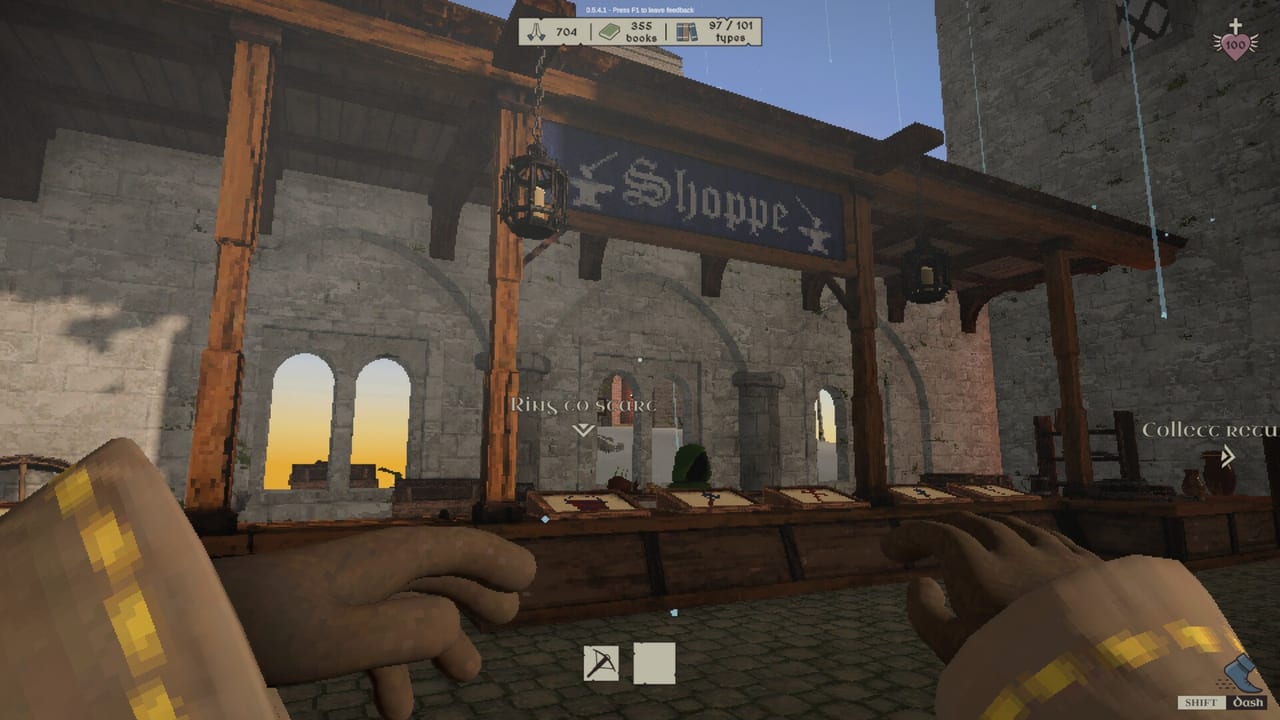
Blessings are paid for work the Abbot can see: scribe orders completed after dark, plus a boon when those orders land early. There is no second currency. This page is the order of operations for earning and spending. Perk ranks live on the perk tier list. Kit ranks live on weapons and tools. The short map of crypt versus shop versus rooms is the Blessings hub.
We do not publish a full price list. Costs move, a shelf-height bug already had to be hotfixed, and shrine cards are not identical every visit. Videos often show about thirty Blessings for a side door and for some shrines (including faster run recovery in the demo). Treat thirty as a scale: a first shelf site is cheaper than a new wing; a single prayer can cost as much as a door. Read the prompt in front of you.
How earning works
Day is not payday. Day is when unique covers arrive at the dock and you file them so night is possible. Night is payday. Ring the belfry, read the checkout desk, fetch the named tomes, and deliver them before dawn. Each completed order is a wage. Leaving leftover time on the clock is the boon. Play videos show a small payout for merely handing books over and a much larger purse when the same night is clean and early — one recorded night awarded fifty-seven Blessings after a good run. Do not expect that number every time; expect the shape: speed multiplies completeness.
That is why carry limit and run recovery sit at the top of the perk tier list. They are not damage. They are how you keep the boon. A filing system from how to organize is the other half: you cannot finish early if you cannot find the cover. Use the memory planner on paper if your real memory is the bottleneck, not your dash.
Failed nights still teach. If you delivered some orders and missed others, you may see a partial purse. Do not spend it on a trophy room. Spend it on whatever caused the miss: a missing bay, a missing ladder, or a missing carry card.
Order of operations
Spend in this order unless a night just named a more specific emergency (fire with no bucket, spirits with no cross).
- Shelf sites in halls you already walk. The morning boat needs a home. Floor piles destroy night memory. Unlock bays before you unlock a distant wing.
- The tool that unblocks the next job. Small ladder when you cannot reach. Quill when covers are damaged. Bucket when fire is on. Dagger or holy cross only if you left those threats on. See weapons and tools.
- Crypt prayers that shorten fetches. Book carry limit, then faster run recovery (demo shrines showed recovery near thirty Blessings). Then tool slots or dash speed. Strength that is only melee waits until you still fight.
- Carpentry and max shelf height when short bays overflow and a theme is about to split across two rooms. Height is how the collection grows without scattering memory.
- Rooms and side doors when the nave is honestly full and you have a filing plan for the new chamber. Videos often price a side door around thirty Blessings. A door into chaos is a tax, not an upgrade. Walk the monastery map first.
- Specialist shrines last. Torch Perk Shrine (ember ignition toward 0 percent) only if fires and fire arrows are in play.
If four monks are arguing at a shrine, stop. Roles from solo versus co-op should already say who carries, who builds, and who fights. Shared Blessings buy one plan, not four wish lists.
Crypt prayer
Down the stairs: ancient shrines. SquarePlay’s three skill names are Strength, Speed, and Carpentry. Cards under those names include carry limit, run and dash speed, faster run recovery, max shelf height, and tool slots. A Torch Perk Shrine sits as its own safety buy. We do not invent extra titles. If the stone says something this page does not, trust the stone and check patch notes.
Pray after a successful night, not during one. The crypt is a detour. Four-player nights already run on about 55 percent of the solo timer; a committee in the cellar is how you miss the boon you came to fund. Solo monks can visit between dock and bell. Hosts should call a spend minute in daylight.
Shelf costs and the height hotfix
Shelf sites take Blessings to unlock. Extra height takes more. A hotfix changed the curve: costs start lower and increase per height. A bug once charged six Blessings for each step, which made tall bays feel identical and brutal. After the fix, early height is the cheap lesson and later height is the genuine investment. That is why carpentry ranks as growth, not as an early panic buy. If a prompt still looks wrong after a patch, wait for notes rather than assuming six-each is back.
Do not raise every bay to the ceiling on day one. Tall clutter is still clutter. Raise the columns that already hold a theme you can name (colour, beast, liturgy, kitchen). Leave short bays for leftovers you have not classified. How to organize is the matching guide; this page only pays for the wood.
Worked spend, not a price list
Example shape, using the thirty-Blessing scale from videos rather than a shop menu:
After two clean nights you might hold enough for a side door or a recovery shrine or a mix of early shelf height, not all three. Pick recovery if nights fail because you cannot recross the hall. Pick height if nights fail because the theme spilled. Pick the door only if you already know what will live behind it. After a sloppy night with damaged stock, pick the quill over any shrine. After a fire, pick the bucket and maybe torch safety, then repair with the quill.
New players should complete getting started and one walkthrough night before they stare at the crypt. How to play explains the bell and desk. Combat explains when steel is the emergency spend. Settings can turn threats down so your first purse goes to shelves instead of a holy cross.
Demo practice is valid. The demo cannot join full-game lobbies, and its shrine prices (recovery near thirty) are a hint, not a contract with the purchased abbey. Launch and patch notes are the places to look when a cost feels new.
Finish early, then spend like a librarian. The boon is the wage multiplier. Shelves and ladders make the next boon possible. Carry and recovery make it likely. Carpentry and rooms make the collection larger without breaking memory. Torch safety and steel only pay for the threats you actually left on. If you cannot say which of those you are buying, put the Blessings down, sort the dock, and take another night.
Frequently Asked Questions
Quick answers for novices tending the Holy Island library.
Do I get Blessings for shelving during the day?
No. The Abbot pays for completed night scribe orders, with extra for finishing early. Day filing only sets up that exam. See how to play.
What is a sensible first spend?
Shelf sites in the halls you walk, then a small ladder or quill, then carry limit and run recovery in the crypt. Full order is on this page; ranks are on the perk tier list.
Why did shelf height cost six each?
That was a bug. A hotfix made height start cheaper and increase as you build up. If a prompt still looks wrong, check patch notes.
Is thirty Blessings a real price?
It is a video scale for some side doors and shrines, including demo run recovery, not a full catalogue. Read the in-world prompt. We will not invent a shop list.
Should co-op players split Blessings?
You share one purse and a shorter night. Agree a spend plan in daylight. Roles are on solo versus co-op and the co-op guide.
When do I buy the Torch Perk Shrine?
When fires or fire arrows are on and embers keep lighting bays. It drives ignition toward 0 percent. Skip it on a peaceful fire-off save in settings.