How to Organize Books in Monk Took Book
Cover symbols, tapestry types, chonky volumes, and a scheme you can recall at night.
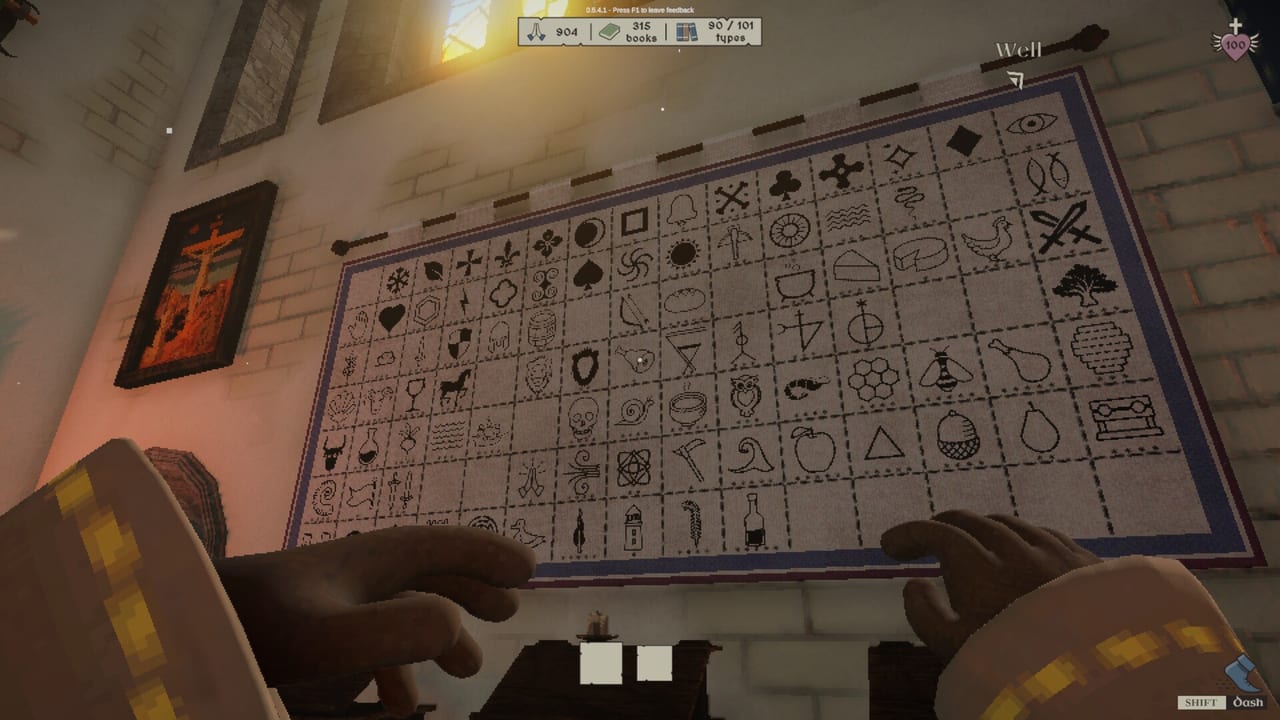
Monk Took Book will not let you judge a book by its title, because there is no title. SquarePlay Games built a library where every morning delivery is a pile of unique illustrated covers. The picture is the data. Night checkout will ask for that picture, not for a sentence you hoped would appear on the spine. If you came here from Getting Started after seating two books, this page is how those two books become a system instead of a lucky guess. If you came here because Vespers is on the HUD and you cannot find the fish, this page is how you stop doing that twice.
Organization is the real endgame. Combat can be scaled or disabled in settings. Memory cannot. The Legendary Collection is a type-complete library; the HUD can show a fraction like 90/101, and a tapestry in the main hall lists types. Your job is to make those types findable at a run. Pair this page with the monastery map so rooms have names, and with the memory planner so the scheme lives outside your skull.
Covers, not titles
Each book is unique. The cover is a symbol you must name out loud or you will not own it. Food, beasts, saints, geometry, weather, tools, faces: the art is deliberately readable at a glance and useless if you never decided what the glance meant. Do not wait for a sorting spell. Do not wait for the desk to remind you in English prose. The desk shows the cover. Your shelves must answer with location.
A bad habit from other games is to dump new stock in an inbox bay and sort later. Later is night, and night is a timer. Sort on arrival. The dock pile is not a warehouse. It is a queue. Every volume that sits on the floor is a volume you will trip over, throw by accident, or watch an ember find. Carry stacks uphill, then seat them into the scheme you already announced, even if the scheme is crude.
Co-op makes this louder. Four monks with four schemes is how the tapestry becomes modern art. Agree the rule before the first stack leaves the planks. Put the rule in text chat with Y if proximity voice is a mess. Co-op is staffing; this page is the contract those staff signed.
Theme, colour, room, and height
Four axes work in this abbey. You only need one as a primary and one as a tie-breaker.
Theme is the default because the art already groups that way. Animals in one bay, religion in another, food upstairs, shapes near the desk. When a cover is both a loaf and a cross, pick the louder symbol and stop debating. Colour is the backup for people who remember red faster than they remember saints. Room is geography: dock overflow never, hall for high-traffic types, side chambers for rare types you unlock later. Height is a last-resort axis and a trap. Tall shelves look like progress and then hide half-books on the row you never check. Buy height after Carpentry and ladders, not before. Blessings and the perk tier list exist so you do not purchase a cathedral you cannot search.
Walk the hall after you seat a morning delivery. If you cannot point at a type without approaching the wood, the scheme failed in daylight and will fail harder after the belfry. The How to Play loop assumes you can fetch. This page is what makes fetch possible.
The tapestry, chonky volumes, and half-books
The tapestry in the main hall is a type list, not wallpaper. Use it when a new cover arrives and you do not know whether you have ever seen that family. The HUD type counter is the same idea in numbers. When the fraction jumps, a new family entered the dock; give it a labelled home immediately instead of wedging it beside whatever had a gap.
Book sizes are part of memory. Chonky volumes eat width and announce themselves. Half-books are narrow, easy to pack, and easy to lose between two fat neighbours. A shelf that looks perfectly full of half-books is a night-shift optical illusion. Leave a visual break: a chonky volume as a bookend, a colour change, an empty slot you treat as a street sign. Placement indicators clamp to valid areas (green versus not); overlap is how you create phantom copies your hands will not find.
Do not organise by imagined rarity or by the order the dock spawned. Spawn order is not a category. It is noise. Do not organise by the weapon you happen to be holding. A torch in the hotbar is not a Dewey Decimal class, and it is how embers happen. Holster, then sort. Controls will tell you how to put the torch away.
Hold Z to sell a shelf you regret. Selling is cheaper than lying to yourself that a dead bay is part of the system. A sold bay that funded a hall slot you can see from checkout is good accounting. A maze of hostile architecture you unlocked because it looked monastic is how the walkthrough turns into a ghost tour.
Freeze the scheme when recall fails
A taxonomy is done when you can stand at the checkout desk, see a cover, and already know the room, the bay, and the row. If you cannot, freeze expansion. Do not unlock another chamber. Do not buy another tall stack. Spend the day re-seating yesterday’s mistakes. Use the memory planner to write the rule in one sentence: animals left, liturgy right, food in the side room, shapes at desk height. Put that sentence on the monastery map as if the stones themselves agreed.
Solo monks can keep a private dialect. Four-player lobbies cannot. If a brother reseats your saints into the food loft because the loft had a gap, the collection is now a rumour. Appoint one shelf priest. Everyone else hauls and defends. Defence is optional; combat and Lord Fluffy can wait until the bays make sense. The Guides Hub and Players Hub will still be there after you can find the fish.
The first night you fail a cover you seated yourself, you do not need a new personality. You need a louder category, fewer rooms, and a tapestry glance before the next dock pile. That is organizing in Monk Took Book: not pretty wood, not a screenshot of full bays, a map from symbol to place that still works when Compline is up and the scribes will not take a substitute loaf.
Frequently Asked Questions
Quick answers for novices tending the Holy Island library.
Why do the books have no titles?
The catalogue is the cover symbol. Night checkout asks for that picture. Build a scheme around art, not around names you will never receive.
What grouping actually works?
Pick one primary axis: theme (animals, religion, food, shapes), colour, room, or height. Add one tie-breaker. Write it in the memory planner.
What is the hall tapestry for?
It lists book types for the Legendary Collection. Use it when a new cover arrives so you seat a family, not a random gap.
How should I handle chonky volumes and half-books?
Treat fat books as bookends you can see at a run. Do not hide half-books between two chonky neighbours without a colour or gap break.
Should a co-op party share one scheme?
Yes. Four schemes is how orders die. Appoint a shelf priest and haul the rest. Co-op covers the staffing side.
When do I throw a taxonomy out?
The first night you cannot point from desk to bay. Freeze new rooms, sell bad shelves with Z, and reseat. Geography lives on the monastery map.